Academic conference “Oppositional Engagement of Women in Authoritarian and Totalitarian Systems of the 20th Century: Poland in a Comparative European Perspective (1919–1989)” - Instytut Pileckiego

31.07.2026 (Fri)
Academic conference “Oppositional Engagement of Women in Authoritarian and Totalitarian Systems of the 20th Century: Poland in a Comparative European Perspective (1919–1989)”
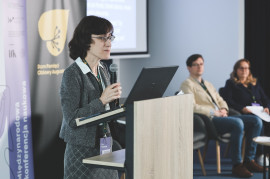
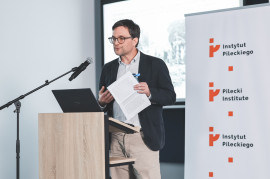
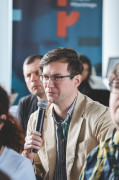
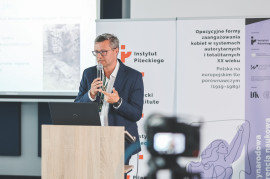
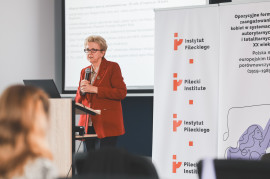
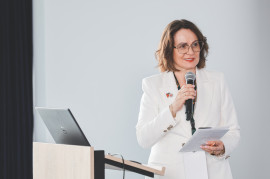
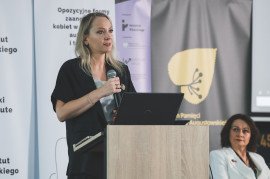
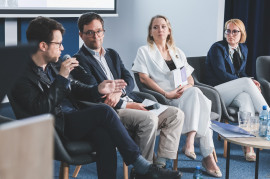
The second academic conference in a series “Forms of Women’s Opposition in 20th-Century Authoritarian and Totalitarian Systems – Poland in a European Comparative Context (1919–1989)” has concluded at the Augustów Roundup Memorial House. The conference brought together representatives of various fields of the humanities and social sciences from numerous research centers in Poland and abroad.
The aim of the three-day international conference was to create a space for interdisciplinary reflection on women’s strategies for resistance, their social and political contexts, the consequences of oppositional activities and the memory of these experiences. The participating scholars analyzed and discussed the fates of both individual women and entire women’s groups who engaged in the opposition movement against authoritarian and totalitarian rule and were deemed dangerous by the authorities of the time. Non-democratic systems developed extensive mechanisms of control, violence and repression, which particularly affected women. The conference provided an opportunity to share insights about the functioning of the power apparatus and its methods of coercion, with a special emphasis on surveillance, blackmail, administrative pressure, political and economic repression, as well as arrest, imprisonment and deportation.

The papers covered various aspects of women’s experiences connected with the emergence of authoritarian systems in Europe after 1918 and during the Second World War, the oppositional engagement of women after 1945, and their political and social resistance to the realities imposed by totalitarian systems in 20th-century Europe. The thematic panels discussed, among others, the forms and methods of resistance to the authorities, women’s agency manifesting itself in oppositional engagement, and activities expressing dissent against the order implemented by the regime in non-democratic systems.
Considerable attention was paid to women who have hitherto been underrepresented in the academic discourse, including so-called secondary historical figures and intellectuals from the educational, academic and artistic milieus. Individual experiences served to paint a broader picture of the complex fates of participants in systemic change and women who fought against authoritarian and totalitarian systems, expressing their dissent both in spectacular, highly visible ways and through more subtle means of soft opposition.
The speakers combined microhistorical analyses with broad transnational comparisons, basing their findings on various source materials from Polish and foreign archives and libraries. In total, more than 60 papers were delivered during the conference, including panel presentations, concluding remarks by moderators and daily summaries by the academic committee. During the three days of debate, thematic sessions and panel discussions, the participants demonstrated the significance of the topic and the need for further research into the history of women in the 20th century, especially as regards the biographies of individual women involved in the opposition, their daily lives and motivations behind adopting various stances of resistance to the authoritarian and totalitarian realities.

The project was financed from the state budget funds awarded by the Minister of Science and Higher Education under the “Wektory Nauki” program.
The conference was held under the honorary patronage of Marta Cienkowska, the Minister of Culture and National Heritage.
The conference was held under the honorary patronage of Mirosław Karolczuk, the Mayor of Augustów.

Honorary patronage

Media patronage


See also
- Hacker attack on the websites of the Pilecki Institute in Warsaw, Berlin, and Augustów
News
Hacker attack on the websites of the Pilecki Institute in Warsaw, Berlin, and Augustów
On the night of August 13–14 our websites suffered another serious hacking attack. Content bearing the hallmarks of Russian propaganda and disinformation — targeting Polish history and reinforcing anti-Ukrainian narratives — was deliberately placed on the Institute's pages devoted to Augustów, Berlin, and Warsaw.
- Oppositional Engagement of Women in Authoritarian and Totalitarian Systems of the 20th Century
News
Oppositional Engagement of Women in Authoritarian and Totalitarian Systems of the 20th Century
International Academic Conference: “Oppositional Engagement of Women in Authoritarian and Totalitarian Systems of the 20th Century: Poland in a Comparative European Perspective (1919–1989)”
- Summary of the academic conference “The Augustów Roundup and Its Aftermath: The Current State of Research and Proposals for the Future”
News
Summary of the academic conference “The Augustów Roundup and Its Aftermath: The Current State of Research and Proposals for the Future”
On 11–12 September 2023, the Pilecki Institute organized the academic conference “The Augustów Roundup and Its Aftermath: The Current State of Research and Proposals for the Future”.
- The Augustów Roundup
News
The Augustów Roundup
- It’s time to look back at the commemoration of the July Victims!
News
It’s time to look back at the commemoration of the July Victims!
The events commemorating the 78th anniversary of the Augustów Roundup began on Saturday, 8 July 2023, with an educational picnic. Through educational games, the youngsters learned about the fate of the Augustów Roundup victims, as well as practiced the cra
- Unveiling of the Wall of Remembrance of the Victims of the Augustów Roundup
News
Unveiling of the Wall of Remembrance of the Victims of the Augustów Roundup
An official unveiling of the Wall of Remembrance of the Victims of the Augustów Roundup – an art installation on the premises of “Dom Turka” featuring the names of people murdered in July 1945.
- The LIPCOWE [July Victims] concert
News
The LIPCOWE [July Victims] concert
What a beautiful and moving July evening! On Saturday, 8 July 2023, on the Netta riverside commons, we took part in the LIPCOWE [July Victims] concert devoted to the families of the Victims of the Augustów Roundup.
- The band Żurkowski and the Pilecki Institute present the album LIPCOWI [July Victims]
News
The band Żurkowski and the Pilecki Institute present the album LIPCOWI [July Victims]
On Tuesday, 4 July 2023, we held a press conference to promote the release of the album LIPCOWI [July Victims], commemorating the 77th anniversary of the Augustów Roundup. The album features songs inspired by the true stories of the victims told by the wit
- Relacja z debaty "Ukraina. I co dalej? "
News
Relacja z debaty "Ukraina. I co dalej? "
Kolejna debata Instytutu Pileckiego w Augustowie za nami! 9 marca zorganizowaliśmy wydarzenie pod hasłem „Ukraina. I co dalej?” poświęcone sytuacji wokół rosyjskiej agresji na Ukrainę.
- The war in Ukraine – the Pilecki Institute’s debate
News
The war in Ukraine – the Pilecki Institute’s debate
Russia’s invasion brings war to Europe on a scale unknown to us since WWII. We invite you to listen to the expert discussion on the situation in Ukraine.
- "Conscience cannot be delegalized". On the closure of Memorial International
News
"Conscience cannot be delegalized". On the closure of Memorial International
On 28 December, the Supreme Court of the Russian Federation endorsed the request from the Prosecutor General’s Office of Russia and ordered the closure of Memorial International.
- The anniversary of the liquidation of the ghetto in Augustów
News
The anniversary of the liquidation of the ghetto in Augustów
On 2 November, the anniversary of the liquidation of the ghetto in Augustów, the Pilecki Institute lay flowers at the monument at the Jewish Cemetery and at the lapidarium on Waryńskiego Street.